 在场
在场Berlin, Aesthetics, & Ostalgie
A while ago, I went to Berlin to see an Omnipotent Youth Society concert. When that melancholic, metaphorical, and epic Chinese rock echoed through the Berlin night sky, I suddenly felt a bizarre resonance between the city’s temperament and this music. This city has simply experienced far too many moments of “until the building collapses.”
Over the following days, I took aimless city walks through the streets and alleys of Berlin. From the retro-futuristic Weltzeituhr (World Time Clock) in Alexanderplatz, to the towering Berlin TV Tower, and the monumental architecture lining Karl-Marx-Allee. Wandering through the remnants of East Berlin, you see a massive number of “Khrushchevki” (known in Germany as Plattenbau). Yet surprisingly, even today, the color schemes and spatial design of these standardized, industrial pre-fab buildings still feel comfortable, even refreshing.
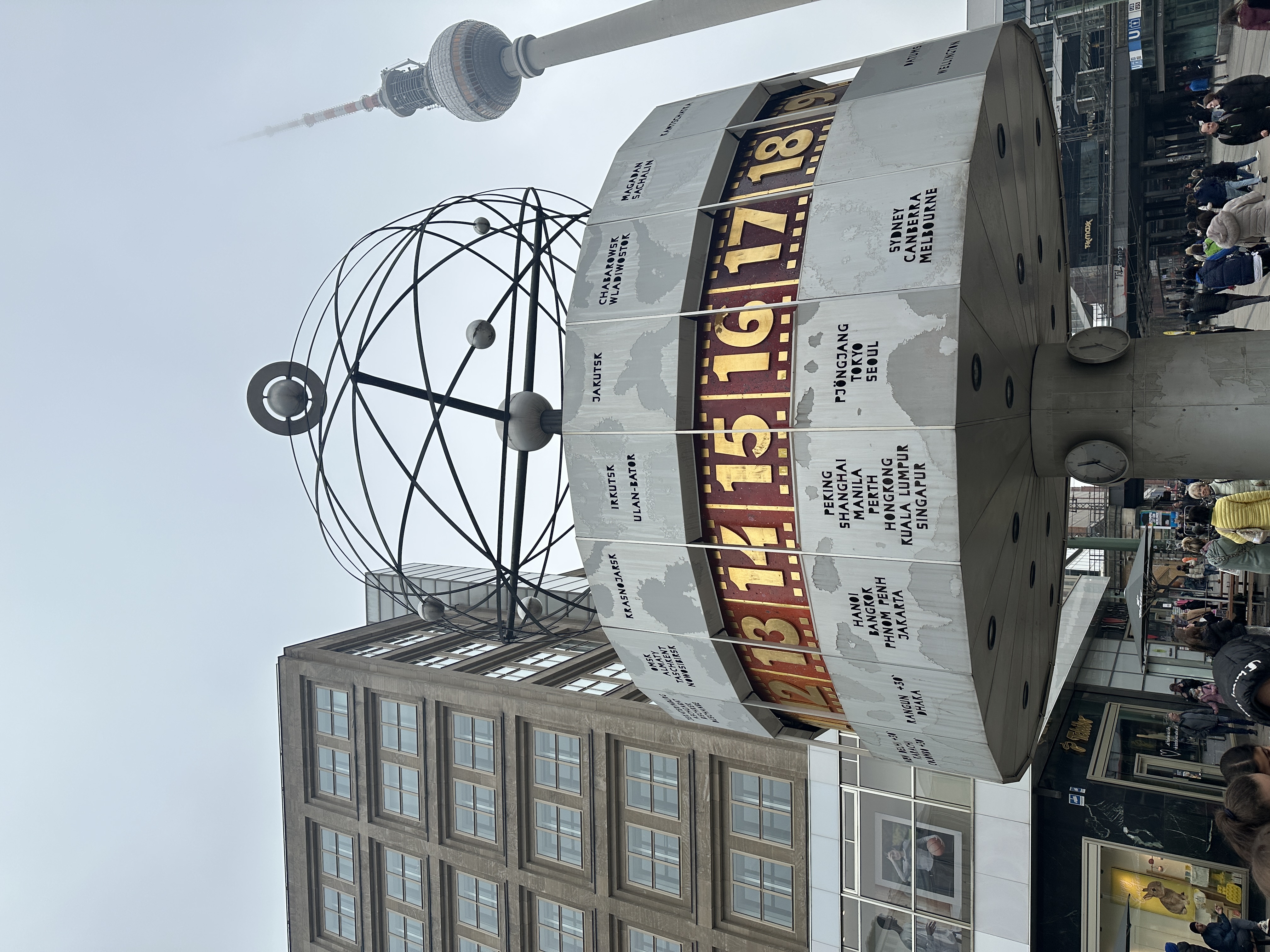
In that fleeting moment when the sunlight hits the buildings, you almost forget the pervasive surveillance of the Stasi, the material scarcity, and the dark chill of the Cold War that defined East Germany in that era.
Sitting on the grass in Mauerpark, watching dogs playfully chasing each other and soaking in the sunlight that I could never see during a Stockholm winter, I experienced a moment of clarity. I suddenly understood why, in today’s Europe, so many people still harbor a romanticized nostalgia for the Soviet Union, for East Germany, and for so-called “socialism.”
This phenomenon even has a dedicated term in Germany: “Ostalgie” (Nostalgia for the East). If we expand our view to the entire former Soviet bloc, the root of this complex largely stems from a unique aesthetic—one that intertwines violence with the sublime.
Whether it’s the suffocatingly colossal 85-meter-tall “The Motherland Calls” statue in Volgograd, Russia, or the Soviet War Memorial in Berlin’s Treptower Park featuring a soldier wielding a massive sword; whether it’s Brutalist concrete architecture, the sharply tailored cuts of Soviet military uniforms, or the exquisitely designed enamel badges brimming with industrial power… Soviet aesthetics delivered a profoundly shocking visual impact, entirely distinct from Western modernism and consumerist aesthetics.
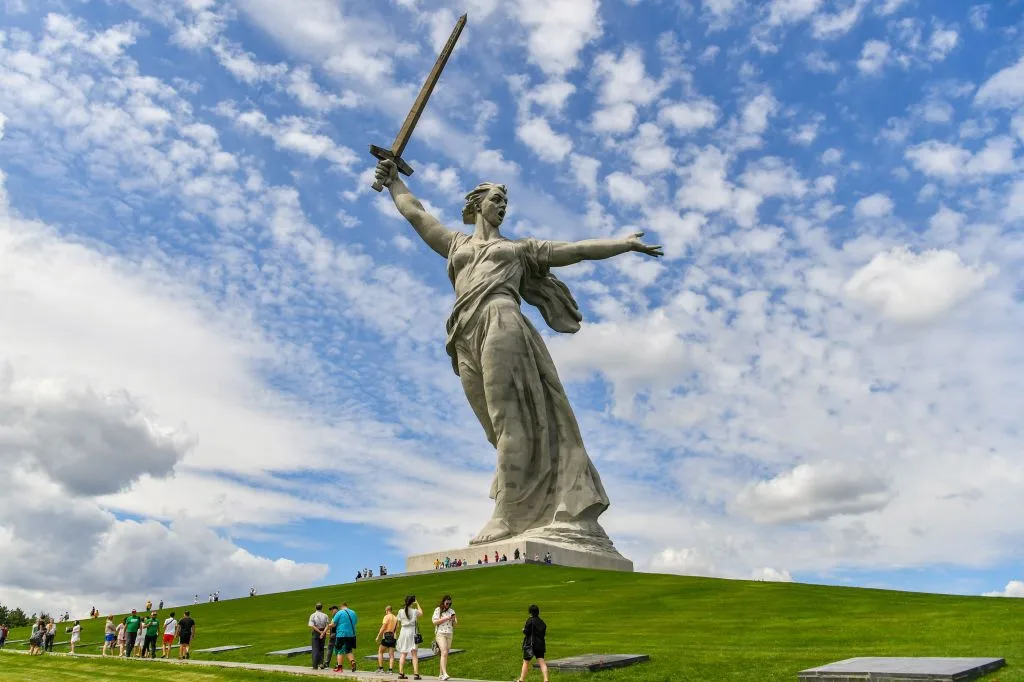
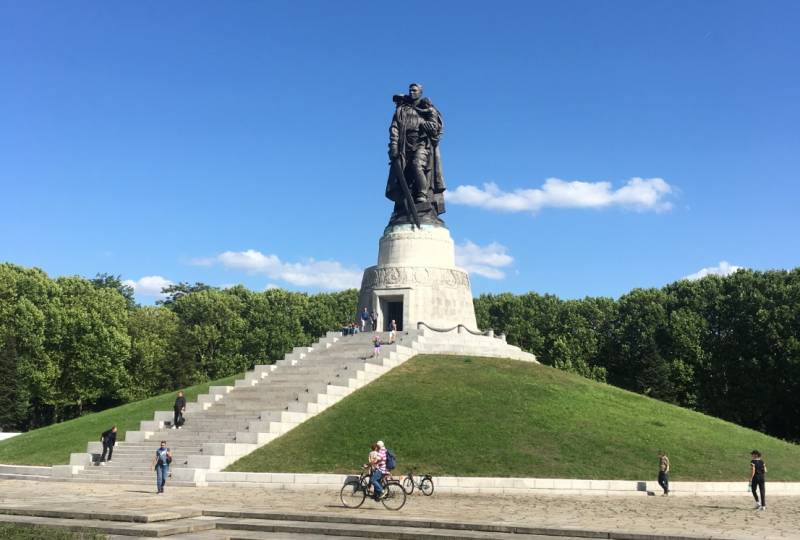
With the fall of the Berlin Wall and the collapse of the Soviet Union, the grueling memories of starving in line for bread, omnipresent political oppression, and the cruelty of the Gulags have randomly blurred as a generation ages out. For modern people who never experienced that suffering, it is difficult to empathize with a terror they never lived through. But those buildings, sculptures, uniforms, and industrial designs have survived across time as tangible artifacts. People’s admiration and worship of this unique aesthetic have gradually been layered with a romantic filter. Consequently, they project a rebellious, idealized fantasy onto a concept—the Soviet Union—that is otherwise despised in mainstream global narratives as much as Nazi Germany: “Maybe socialism back then wasn’t so bad after all?”
From a psychological standpoint, this is understandable: aesthetics has become the hallucinogen of a cruel history.
But this brings me to another deep bewilderment: if Europeans miss the Soviet Union and East Germany because of their awe-inspiring aesthetic remnants, then why on earth do some people miss the Mao era of China?
Some claim that China’s first thirty years were true socialism, and that the reform and opening up after 1976 was a bourgeois usurpation of power that changed the country’s true colors. But even if you travel back to those first thirty years, you will find an absolute aesthetic desert. Not only did it fail to leave behind any grand, sublime architecture or sculptures like the Soviets did, but it also fanatically smashed and destroyed countless beautiful things passed down through millennia of ancient Chinese history. From industrial products to daily clothing, everything was mostly shoddily made, devoid of any unique aesthetic appeal.
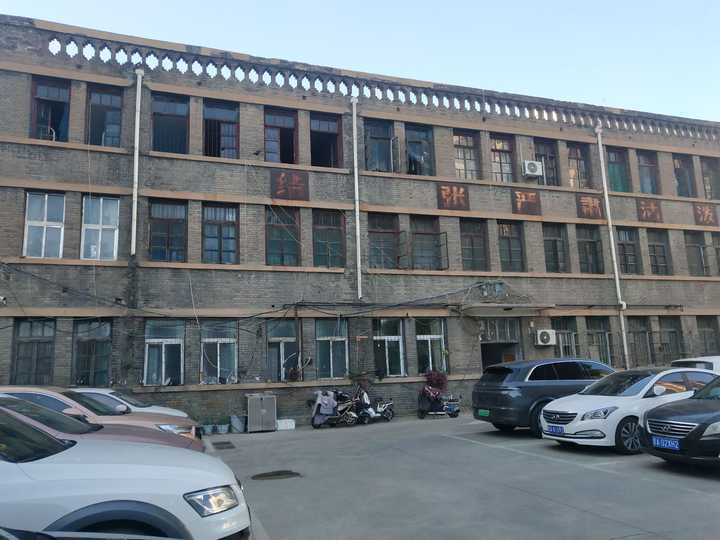
There is absolutely no aesthetic filter there, so where does the nostalgia come from?
If we categorize these people, they generally fall into two groups: Chinese and foreigners. For the Chinese, their mindset boils down to a few types. The first type includes those who lived through the Cultural Revolution and reaped its twisted dividends—they fondly remember a time when they could beat up leaders, verbally abuse teachers, and ride roughshod over their superiors with impunity. They miss the thrill of ordinary people being able to “wreak havoc in Heaven.” The second type consists of those driven to the brink of insanity by today’s gaping wealth disparity, class rigidification, and the grueling 996 work culture. They filter out the “egalitarian poverty” and “political persecution” of the past, holding onto a utopian illusion of “relative fairness,” “a society without capitalists,” “officials eating and living with the masses,” and the “iron rice bowl (a job for life).” The third type are just idiots.
As for why foreigners would yearn for socialist China, I used to find it incomprehensible. But later, reading about the personal experiences of the renowned American sinologist Perry Link provided a perfect case study.
In the 1960s and 70s, a young Perry Link, like many Western left-wing youth of the time, held immense hope and a utopian fanaticism for Mao-era China. In their armchair imaginations, it was a “perfect state” that had eradicated social classes, eliminated capitalist exploitation, achieved true equality, and genuinely respected the working class. Finally, in 1973, he set foot on his much-longed-for socialist holy land as a “friendly personage,” only to find that reality wasn’t so pretty.
The first thing to shatter his “classless society” filter was the seating on trains. As foreign guests, Link and his group were arranged in comfortable “soft sleepers,” while he observed the vast majority of ordinary Chinese citizens crammed into “hard seats.” Highly principled in his socialist ideals at the time, he was thoroughly confused and asked the Chinese guide, “Besides us, who else gets to ride in the soft sleepers?” The guide answered as a matter of course, “The leaders.” Link pressed on, “Why do the leaders get to sleep in the soft sleepers?” The guide replied, “The leaders are busy with work, carry heavy burdens, and need the soft sleeper.” At that moment, the illusion of an “egalitarian socialist society” in his mind began to crack. In this country that claimed to have abolished class, privilege didn’t just exist in a different form—it was blatantly institutionalized and justified.
Another seating-related incident occurred in Yan’an. When Link and his group boarded a public bus, the driver shouted, “Foreign guests!” Four seated passengers immediately stood up to offer their seats. An elderly man sitting next to Link also stood up to give him his seat, but Link sensed he wasn’t doing it willingly. So Link said, “Please, sit down!” But the old man said nothing and just kept standing. Feeling awkward, Link remained standing as well. The bus was very crowded, packed even, but until they got off, that seat remained completely empty.
However, the minor, highly metaphorical incident that truly made him see through the core of the system was: the broom and the silk.
In a small shop in Shanghai, Link saw a handmade broom made of sorghum stalks. Through the eyes of this Western leftist, the natural, rustic broom represented “the sacredness of labor,” so he excitedly bought it, intending to bring it back to America as a gift for his mother, who appreciated nature and simplicity. But this infuriated the accompanying Chinese guide. The guide not only forcibly confiscated the broom to exchange it for another one, but on the way back, with a sense of offended humiliation, interrogated him: “China has plenty of silk, jade carvings, and cloisonné. Why did you single out a broom to give to your mother to represent China? Doesn’t your mother like silk?”
This detail with absolute precision exposed the true underlying color of Chinese society at the time. Link repeatedly asked himself: In a country that constantly preached “the dictatorship of the proletariat” and “the working class leads everything,” did this state-employed guide genuinely respect the working people deep down? Was he living inside a colossal lie—superficially chanting that the broom (labor) was supreme, while deep down desperately craving silk and jade (the privileges of capital and the elite class)?
Link later said something profoundly classic: He idolized Mao back then because he yearned for a society of peace, freedom, justice, and equality for all; later, he abhorred that era, still because he yearned for peace, freedom, justice, and equality for all. He hadn’t changed; he simply realized that the country plastered with the “socialism” label had been an antonym from the very beginning.
This disillusionment triggered by the “broom and silk” actually answers the core question perfectly: if you look back at history with the naive notion that “socialist China was an egalitarian utopia,” you are destined to be played for a fool, just like the young Perry Link.
This leads to an even deeper real-world fallacy: since even the most fanatical era had absolutely nothing to do with true equality, why do some people today still think China’s current glitz and glamour are brought about by “socialism”? If someone genuinely believes that, it only proves they understand neither socialism nor China.
The very reason the term “socialism” succeeded in China, allowing this regime to endure for over 70 years and making China the so-called second most powerful country in the world today, lies in its core secret: China has never truly practiced fundamentalist socialism.
The state ruled by the Chinese Communist Party functions as the largest and most successful “backdoor listing” (reverse merger) company in human history. That it stands tall today owes its first thanks to Mao Zedong, that great inventor of the Sinicization of Marxism-Leninism, who took the core of a peasant uprising and dressed it in the shell of the proletariat—using the Zizhi Tongjian (Comprehensive Mirror in Aid of Governance) to interpret Marxist-Leninist works is quite an invention in itself. Furthermore, it owes thanks to Deng Xiaoping, who brilliantly invented the grand phrase: “Socialism with Chinese characteristics.”
This “characteristic” acts as a massive catch-all basket. Market economy, admitting capitalists into the Party, wage labor, exploitation of surplus value, land finance… as long as it works, as long as it generates the economic growth needed to maintain the regime’s legitimacy, any action that entirely violates traditional Marxist definitions can be tossed into this basket and justified with the red stamp of “socialism.” At its core, it is simply a highly pragmatic form of state capitalism or authoritarian capitalism.
Therefore, whether it’s the worship of the Soviet Union’s colossal aesthetics or the yearning for the Mao era’s fake egalitarianism, they are essentially just painkillers sought by modern people trapped in real-world dilemmas. They just bought the wrong medicine and read the wrong label. Longing for and praising China in any era is a matter of personal choice, a question of insight and perspective, but it has absolutely nothing to do with socialism.